Familiarity as a Gaming Mechanic

Despite the growing list of new games coming out each year, we all have our personal gaming favourites that we return to time and time again.
There are some some obvious reasons for returning to classic games, but the aspect of “gaming familiarity” is gaining momentum: as development teams are taking tested and successful gameplay elements and using them as a format to improve experiences in a brand new game.
Using the gameplay frameworks of other games
There is some logic to replaying our favourite games. Ultimately in our time-pressed lives it’s a way to instantly connect with the game you’re playing; a tried and tested gaming world that requires less time trying to understand how to play it. It’s liberating to show off our technical proficiency with a game (even if it’s only to ourselves) and familiarity with a game’s pace, structure, and design increases the confidence we have to do this even better and faster.
Developers are tapping into these ideas of familiarity by taking a gaming framework that is widely known and repeating it in their games as a way of improving a new game’s starting moments. As a result it’s common for FPS games to contain options for various Halo related controls, improving the ease of use of a game significantly by allowing people to find their reload and grenade buttons without strain or thought.
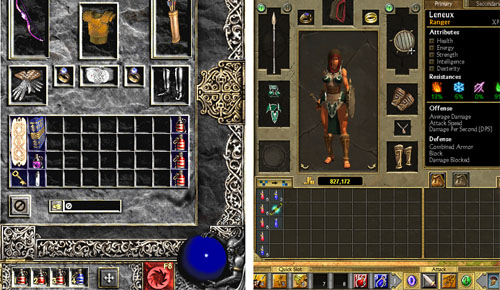
Some games take this even further by actively naming the game that inspired their creation. Titan Quest was widely regarded as a “Diablo clone” which encouraged fans of the other main action/RPG series to start playing it - further encouraged by the recognizable control scheme, inventory quick keys, and equipment similarities that allowed those clued up on the earlier Blizzard series to get up to speed extremely quickly.
As gamers we appreciate being able to feel like we’ve mastered the main elements of a game early so we can refocus on “playing” rather than “learning to play”. As such new games struggle and strive to recreate this easiest of intros.
Good starts and the color green
So few games start off on the right foot. Those first few hours with a new adventure are the most crucial, shaping our opinion of the game, as we decide how much our expectations match the reality. We are at our most impressionable, teetering on the edge between enjoyment and dislike. Once an opinion has been formed about a game in it’s opening hours it’s very difficult to erase, so it’s no surprise that developers often put their boldest ideas alongside familiar concepts of gameplay and control to give a more balanced idea of how the opening moments of a game match up to it’s entire journey.
A lot of games start with a big visual intro or idea to set their gameplay ideas apart from the output of others. Whether the introduction is sinister, unnerving, or welcome, lots of games share a same similar motif; familiarity. The best example of this is the starting color palette, which is often shorthand for the gentle ease into a game’s first proper level. Often this is coloured in green or covered in grass and foliage.
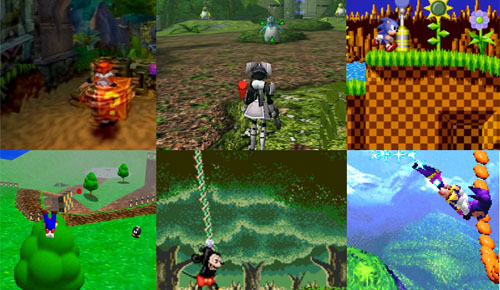
These games often single out these first “green” levels as a good starting place to learn the games fundamentals through positive reinforcement, before the player goes on into a deeper or more difficult environment. Even in the games that do not follow this process of a starting green space often have a “green area” as a reward for venturing further - a moment of calm in an otherwise chaotic game world.
Final Fantasy VII is a good example of “green as the carrot”. Ultimately you escape the polluted mass of Midgar to continue the game, and your reward is a green and open world map which hints at the length and enormity of the adventure to come.
For games at least, familiarity doesn’t breed contempt, it is instead a quiet but all too uncommon theme that helps us to associate and groups games by their playability and similarity, and one we’ll soon see used even more commonly in the future.

Tags: accessibility, controls, Diablo 2, familiarity, Final Fantasy VII, game design, gaming themes, Halo, playability, Titan Quest
This entry was posted on Tuesday, September 7th, 2010 at 10:10 am and is filed under Articles. You can follow any responses to this entry through the RSS 2.0 feed. You can leave a response, or trackback from your own site.