

Review: Game Dev Story (iPhone, iPod Touch, iPad)
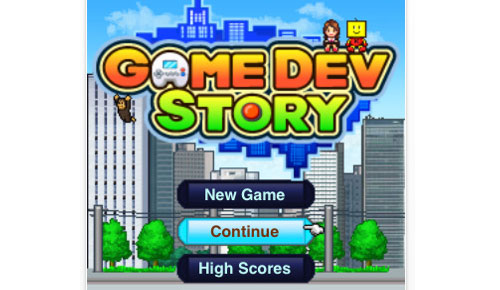
I’m not going to lie. Most of the time I spend playing games on my iPod Touch is when I’m either bored waiting in a line somewhere or on the can. This doesn’t so much reflect poorly on the quality of games on the platform as it does on me as a consumer.
On rare occasion, a game for my beloved music/audiobook/podcast machine will come out that is so addictive I actually choose to play it on my couch under “normal” gaming conditions.
Game Dev Story is such a game.
Game Dev Story has a simple premise: you manage a fledgling game studio. It is up to you to choose projects and assign tasks to your team of programmers to get the job done. Your product will then get released to the reviewers and finally the mass market.
At the start of the game, you are in a small studio with only two developers and room for two more. You don’t own any licenses for the few consoles on the market, so you can either make a PC game, buy a license for a console currently on the market, or take a contract making a product as a third party (which is usually a quick way to raise capital).
When you do go to make your first game, you’ll have a limited number of game types and styles to choose from. You also pick the directions the game goes in, putting your few available points into cuteness, realism, niche appeal, polish, etc. If the game type, style, and direction work well together, you have a better chance at being successful on the market. Popular games will grow your fanbase, which will result in higher sales on future titles.
Game development is broken up into segments. When you first start a game, you pick one of your developers to write up the proposal, or you can pay extra to outsource it. As your developers work on the game, their stats will determine how many points they are putting into the fun, creativity, graphics, and sound on the game. In the alpha and beta phases, you have opportunities for a developer with the relevant job and skills to add big boosts to those categories.
As you progress, you can level up your developers job classes, train them for new skills and in doing so, unlock new game types and styles. As time passes, new consoles will come onto the market, and old ones will vanish.
If your game gets good enough review scores, it will enter the hall of fame and you will be able to make sequels, which will automatically have hype built into them. Once you have the funds and have leveled your characters up enough, you can even build your own console.

Game Dev Story has a certain charm for those that have followed gaming throughout the years. The art is all done in a charming pixelated style. The consoles are all parodies of actual game consoles, from the IES to the Playstatus and Game-Box. Even the developers are parodies of famous programmers, artist, and actors. There is even a game conference where you can hire a mascot, booth babes, or a celebrity guest to promote your work.
While it has some light strategy and RPG elements, most of the gameplay is pretty automated. You make the decisions of who does what, but you don’t do any of the actual work. Your characters are really just a list of stats, and this is where the game started to fall apart for me.
When WingDamage, Inc. (my in-game studio) was small and had only a few programmers with fairly low stats, it felt like I had to really try my best to match up game styles and directions to make a hit. The reviewer that gave my game a 6 and said “Only hardcore players will like it…” might have had a point. Maybe I should adjust the direction on my next effort.
So I tweaked things until I finally had a game with scores that were eights and above and made the Hall of Fame.
Once I had my first hit, Dungeon Guy IV (I didn’t know about sequels, and was naming them as such myself), I was on a roll. I had money coming in. Enough that I could throw huge amounts at my next game. I experimented with a pop star simulator (Kidz Popz), its spin-off, a pop star puzzle game (Kidz Popz Puzzlz), and an Egypt themed audio novel called Dr. Egypt.
Since I had money to throw at these projects, the stats automatically turned into good scores from reviewers, which in turn became more sales.
By the time I was up to Dungeon Guy IV 3, I was unstoppable. I had so much money that I was able to hire all-new, super talented people to my staff, max their levels, and continually throw money at their training. I released my first console, The Barrel Roll, and made even more money.
While Game Dev Story is incredible fun and addictive, especially when you first start out and are struggling to get off the ground, it does have some major flaws. It is incredibly easy to break the game once you have money rolling in.
I could not longer fail. Even when I intentionally started making unpopular game combinations which would get less than stellar reviews, they would sell. My card based checkers game, Card Checkz sold gangbusters. And that is when I stopped playing.
That said, I do think it’s worth picking up if you are looking for something fun and interesting for your iDevice. For only a couple of dollars, I played a good six hours or so of Game Dev Story. That’s more than I can say for some triple-A “blockbuster” titles I’ve played.
This is a game I would love to see a sequel to. If Kairosoft were able to expand on the basic ideas presented in Game Dev Story, I think they could potentially have one of the all-time great game concepts on their hands. They have a really interesting thing going on here and I would love to see more of it.

Tags: Casual Games, iPhone Games, Kairosoft, rpg, strategy
This entry was posted on Friday, October 29th, 2010 at 5:00 am and is filed under Indie Games, Reviews. You can follow any responses to this entry through the RSS 2.0 feed. You can leave a response, or trackback from your own site.









January 6th, 2011 at 7:34 pm
Guilherme says:Man, how did you develop your own console?
It’s not working for me. Tks !!
January 7th, 2011 at 8:56 am
Jonah "spambot" Gregory says:The trick is to level up a character to level 5 in every job type. I would recommend starting with a hacker with good stats. After they have trained up to level 5 in all jobs, it should unlock the Hardware Engeneer job. Once you have one of those, you can built a console!
You can only have 1 console on the market at a time though, which is kind of a bummer since there are both handheld and standard consoles.